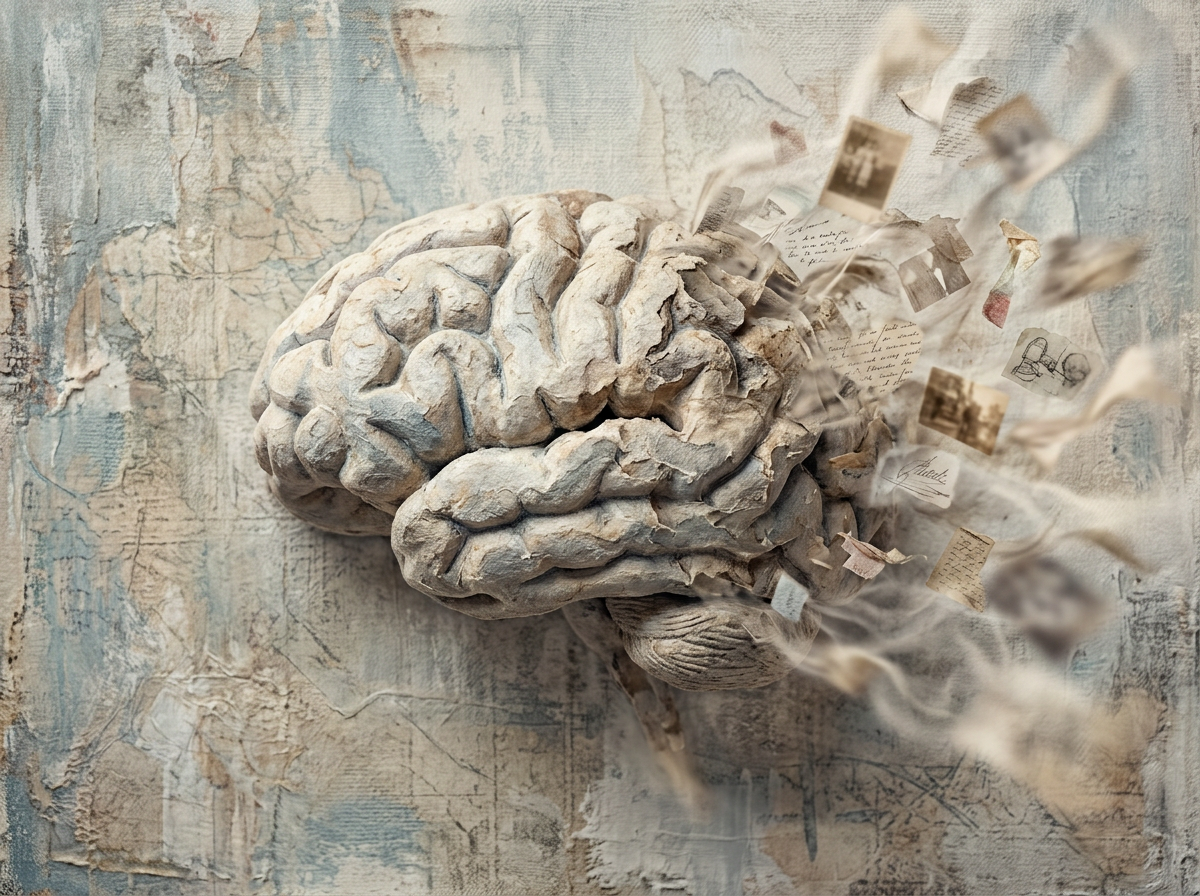
Remember when we would hoot over the fact that after 12 hours of smoking ganja, we’d swear we couldn’t remember a thing we’d done that day?
Then there were the times when you were talking to someone, and suddenly your mind went blank as you tried to remember what the hell you were talking about.
There are many other examples, like forgetting people’s names and specific dates (how long did I live with that woman?), as well as my more recent ones; what do the initials SEO stand for? (This kept me up last night. Search Engine Optimization.)

When I was younger, I would shrug off these moments of blank memory to my obsessive Mary Jane and Booze use. Now, on the edge of seventy-seven years old, having had a stroke and being sober for nearly fifteen years, I wonder whether my shrinking memory is just a natural by-product of getting older or if something deeper is amiss.
I feel guilty even writing about this. I have firsthand knowledge and experience with loved ones who have suffered and died from Alzheimer’s Disease. It is not an illness to take lightly or to mock.
It is a killer that leaves a dark trail of sorrow in its wake as family and friends try to help a loved one cope, but to no avail.
We also hear a lot about Dementia and wonder, “Is this it?” The small temper tantrums, the shouting out loud sometimes, “Get off my lawn!” The growing impatience with humankind. All the while, you’re not sure why you’re pissed. You don’t know why you’re angry, but you are.
I’m drug- and alcohol-free, so that can’t be a catalyst. So it must be something else.
Even with my personal experience with Alzheimer’s disease, I can’t believe how ignorant I was and how I sounded. I checked the Alzheimer’s Association’s website and searched for the difference between Dementia and Alzheimer’s disease.
“Dementia is a general term for a decline in mental ability severe enough to interfere with daily life, while Alzheimer’s is a specific disease. Alzheimer’s is the most common cause of dementia.” Alzheimer’s Association

The group explains that Dementia is not a normal part of aging. They define Dementia as a group of symptoms, such as “a decline in memory, reasoning, or other thinking skills.”
On the other hand, the association defines Alzheimer’s as a “degenerative brain disease that is caused by complex brain changes following cell damage.” The result is dementia symptoms that worsen over time.
Alzheimer’s is also described as not a normal part of aging. Although most people with the disease are 65 and older, according to the Alzheimer’s Association, “approximately 200,000 Americans under 65 are living with younger-onset…disease.”
If not dementia or Alzheimer’s, why do I feel I’m experiencing memory loss?
All those years of drugs, booze, and rock ’n’ roll must have had an impact. Or maybe my brain only has so much room for information and knowledge.
I always laugh at the eight years spent in college, from the ages of sixty-seven to seventy-five, which were one continuous exercise in cramming as much as I could into my head in a brief amount of time so that I could test the boundaries of memory.
And to be honest, it sometimes feels like it’s going in one ear and coming out the other.

For some consolation, I checked out the National Institute on Aging, and the first thing that popped up was “What’s normal forgetfulness and what’s not?”
They tackled the issue head-on: the difference between “normal, age-related forgetfulness” and more severe problems, such as being unable to find one’s way home or use one’s phone.
They posted a checklist that should help determine whether it’s just a simple act of aging or whether it’s time to call your doctor:
- Asking the same questions over and over again
- Getting lost in places a person knows well
- Having trouble following recipes or directions
- Becoming more confused about time, people, and places
- Not taking care of oneself —eating poorly, not bathing, or behaving unsafely
I especially love the tips they provided for dealing with forgetfulness. Here are a few:
- Follow a daily routine.
- Plan tasks, make to-do lists, and use memory tools such as calendars and notes.
- Put your wallet or purse, keys, phone, and glasses in the same place daily.
- Stay involved in activities that benefit both the mind and the body.
You can find the rest of the list and other information HERE.
Forgetting a person’s name or a long-held fact can feel destabilizing. To remember the name of a longtime friend, I will stop in my tracks, close my eyes, and go through the alphabet, hoping that a letter will trigger a memory.

A-Z. Most of the time, it works. And when it doesn’t, I just put it off for another time because I know it will come back to me sooner or later. Or I won’t.
I have had older relatives who increasingly showed memory loss as they aged into their nineties and even into their 100s.
You could see they were trying hard to remember, and the fear in their eyes. For some, there was a quiet acceptance that it was what it was, even if they couldn’t express it. It’s scary.
Now, at my age and recovering from a stroke, I have an extra incentive to address both my memory loss from the stroke and the challenges of aging.
I keep myself busy with reading, writing, and engaging with people, and I know I have other things I must do to improve my health. As I approach the milestone age of 80, I am more than ever resolved to not only push through aging but also carry as many memories as possible.
And to find strength and happiness in them, even if I can’t remember their names.
I can live with that.

Leave a Reply