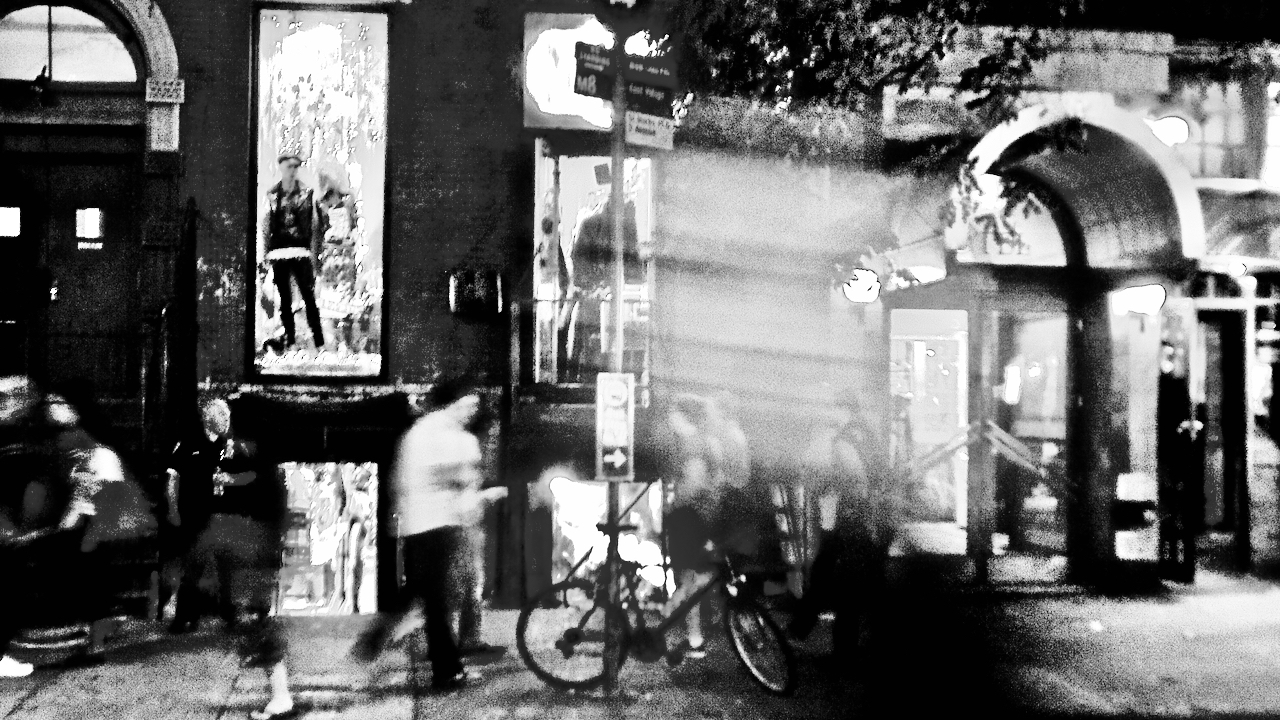
The following writing sample is the product of free writing exercises I like to call “Exercising those Writing Bones.” These were part of my Theater 389 Playwriting class this Fall 2023 semester. We were given various prompts and then asked to write a monologue, a scene, or a narrative within a limited amount of time, usually 10-20 minutes long.

Eddie Gomez dreams about hitting the lotto. In his mind, so many problems would be solved. That’s why he goes to the 156th Street Market every day. The bodega across the street from his apartment. The one run by the two Iraqi brothers who immigrated from Fallujah, the city where Eddie almost lost his life, where he was shot up and had to spend nearly a year in rehab. Someone had won ten thousand dollars once with a ticket bought at the bodega, so now it was a lucky lotto ticket place.
But Eddie soon discovered there was more to the bodega than a winning lotto ticket. He soon found a hell of a coincidence: the two brothers who owned the bodega were from the city where he almost died, Fallujah. Once they found out that he was an ex-marine who had fought in their hometown, they would find any reason to argue with him about that lost cause, the Iraq War.
“Why did you invade us?” they would ask. “You should have stayed home, and you wouldn’t have been shot and nearly killed,” they repeated over and over.
It was all Eddie’s fault that they would admonish him as they prepped his order of hallah turkey with American cheese on toasted Italian bread with mayo and the Spanish peppers and pimientos that Eddie especially loved.
“You know your soldier friends killed our mother and sister. But not before they raped them.”
The silence that followed while they were ringing up the sandwich and the Dr. Brown Cream soda that Eddie loved made him uncomfortable. He knew about the rapes and murders of Iraqi women and girls, but he had told himself years earlier that he would not think about them again. Not here, at least. Not while he thought about the sandwich that the brothers who owned the bodega made special for him. The bread was always toasted just right. They didn’t skimp on the turkey or the cheese.
Why did Falluja come up? Who brought it up? Eddie’s been coming here for the past five months, and no one ever mentioned the war, Falluja, or that these two brothers were Iraqis. Eddie thought they were like every other Arab from the words they threw around. He knew enough that he could catch some words, but then they would switch to some different language that sounded all too familiar, but he went out of his way to forget it, ignore it, and become deaf when he heard it so that he couldn’t hear it.

Now, he just wanted to run out of that Bodega, cross 156th Street to Tinton Avenue, get to his building, and hike up three floors to his apartment where he would unlock three security locks that he had installed after the last break-in, run inside, slam the door shut, lock all three locks, and dash to the living room to that new recliner he had bought because his back was acting up again, then turn on the TV so he could watch the Knicks kick some ass and eat his halal turkey with American cheese and his favorite, Spanish peppers, pimientos, on toasted Italian bread and drink his Dr. Brown Cream soda. That’s all he wanted to do.
He didn’t want to think about the Iraqi brothers, their bodega, Iraq, the day he almost died, being the witness to the rape and death of a woman and her daughter who looked eerily like the women in the picture frame hanging from a shelf behind the counter, the cash register, and the two-inch thick plexiglass that ran the entire length of the counter. Herbie, the oldest of the brothers, had told Eddie that, if they could, they would have put the whole store of merchandise behind the plexiglass.
“I’m tired of getting ripped off. But you wait; I have a surprise for them next time.”
Eddie figured that they had at least a gun now behind the counter. Knowing Rocco, the youngest of the two brothers, they probably had a bazooka underneath the counter next to the lotto tickets. Rocco was always talking about how many weapons he had used during his time fighting ISIS.
“The Americans didn’t give a shit. They knew what I and others were doing. As long as we were killing ISIS and not them, they left us alone.”
Eddie munched on his sandwich, sipped on his Dr. Brown cream soda, and wished he hadn’t seen that picture of the Iraqi brothers’ mother and sister. The flashback seemed so natural when he was confronted with the picture. He had never noticed it when he had gone to the 156th St. Market to buy his favorite sandwich. Now, the picture haunted him.

Eddie was there. The night of the rape and murder of the two women. He wished that he had done something, Said something. He wanted to walk out when his team brought the women into the back room and started undressing them while they screamed and kicked and had to be held down while each of them took turns doing…Eddie kicked the thought out of his head. He didn’t touch the women. He didn’t do anything to them. He wasn’t responsible for what five crazy motherfuckers did on that night in that back room of a house on a lonely stretch of street in a town whose name he would rather forget.
But he couldn’t. Eddie just wanted to live an everyday life but was having problems adjusting even as he had moved back into his old neighborhood to be close to his aging parents. Ana and Roberto Gomez were still living in the same apartment at 710 Tinton Avenue where they had raised Eddie, his brother Bobby, who died last year from a drug overdose, and his sisters, Raquel and Juanita. Eddie’s sisters moved away years ago, preferring a freer life than their father insisted on imposing on them. Raquel moved to Austin, Texas, and Juanita moved to Miami. Eddie moved back to the Bronx when he left the Marines. There was the apartment on Castle Hill and then the one on 149th and Southern Boulevard. But all that changed when his mother got sick, and Eddie’s father started to display signs of dementia. They had no room for him in the apartment, so he figured he could move close by and still be there for them.

Eddie tried convincing at least one of his sisters to move back to the Bronx to help him, even if it was temporary, but they both told him to – they used a word that he didn’t appreciate them using on him. So, here he was, juggling a mechanic’s job at a Goodyear Tire place and caring for his parents while trying to erase that night in Fallujah from his mind, past, and life.
He wasn’t doing a good job of the last one. Fallujah haunted him, and he wished he could not see the images in his head daily. Now that he had seen the photo of the two brothers’ mother and sister in the only bodega that seemed to get his favorite sandwich right, he thought he’d have to find another one. One that didn’t have a constant reminder of what had happened five years earlier. The rape and murders in Fallujah. The memory of almost dying. The day that his team didn’t back him up and let him be shot. When his betrayal of their code almost cost him his life. This is where he now lives, in a memory and a guilt that will surely kill him one day.
“I should have died that day in Fallujah. It would have saved me these days.”

Leave a Reply